
 English
 Español



+86-0577-86858771
The medical device industry continues to develop new solutions that support a wide range of diagnostic and treatment procedures. Among the components used in these systems, Solid Medical Needles and Special-Shaped Needles have become important elements in many precision medical applications. Their design and manufacturing quality can influence device compatibility, operational stability, and product development flexibility.
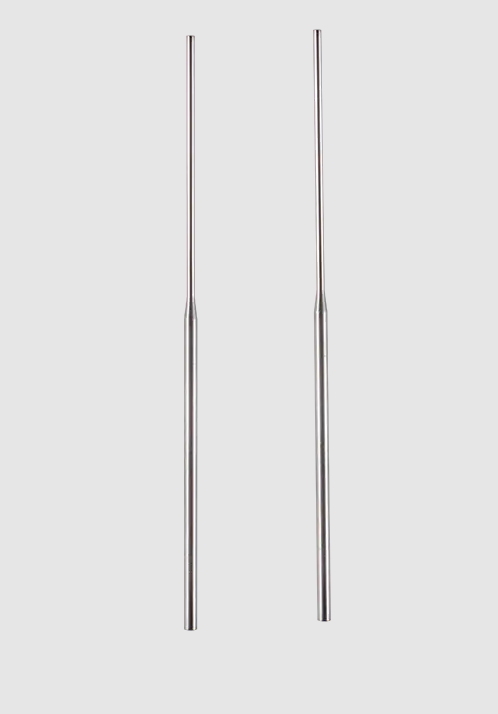
Understanding Solid Medical Needles
Solid Medical Needles are commonly used in medical devices that require accurate positioning, controlled penetration, or specialized mechanical functions. Unlike hollow needle structures that focus on fluid transfer, solid needles are often incorporated into instruments designed for guidance, marking, tissue interaction, or device support.
These needles are typically manufactured from medical-grade materials selected for durability, corrosion resistance, and processing suitability. Careful machining and finishing help create smooth surfaces and consistent dimensions that meet the requirements of medical equipment manufacturers.
As device designs become more sophisticated, the demand for precision components continues to grow. This has encouraged manufacturers to refine production processes and improve quality control procedures throughout needle manufacturing.
Applications in Modern Medical Devices
Medical devices often rely on components with strict dimensional requirements. Solid Medical Needles can be found in various types of equipment where structural consistency and accurate positioning are required.
Diagnostic Instruments
Many diagnostic systems include precision components that assist with sample collection, positioning, or device operation. Solid needles can support these functions while maintaining dimensional stability during use.
Surgical Equipment
In surgical environments, precision remains an important consideration. Solid Medical Needles may be incorporated into specialized instruments designed to support procedural accuracy and device functionality.
The needle geometry used in these tools is often determined by the intended application and the requirements of the overall instrument design.
Biopsy and Sampling Systems
Certain biopsy-related devices utilize solid needle components as part of their structure. These applications often require careful manufacturing to ensure compatibility with surrounding device assemblies and procedural requirements.
The Growing Use of Special-Shaped Needles
As medical technology evolves, many device manufacturers are exploring customized component solutions. This has increased interest in Special-Shaped Needles designed for specific clinical and engineering requirements.
Special-Shaped Needles may include curved profiles, angled sections, side-hole configurations, or other customized geometries. These designs can help accommodate unique device structures and procedural objectives that standard needle shapes may not fully address.
The development of customized needle designs often involves close attention to both functionality and manufacturability. Engineers must consider how the needle will interact with other device components while maintaining production efficiency.
Manufacturing Factors That Influence Performance
Producing precision medical needle components requires a combination of advanced equipment and controlled manufacturing processes.
Material Selection
Material choice plays an important role in the overall performance of medical needles. Manufacturers frequently evaluate factors such as corrosion resistance, mechanical strength, and compatibility with sterilization procedures when selecting materials.
Different applications may require different material characteristics depending on the operating environment and device function.
Precision Processing
Grinding, shaping, and polishing processes help achieve the dimensional accuracy required for medical applications. Consistent manufacturing practices support repeatable product quality and reliable assembly performance.
Surface Finishing
Surface treatment methods can improve smoothness and appearance while supporting cleaning and sterilization requirements. A well-finished surface may also contribute to better interaction with surrounding device components.
Future Trends in Precision Needle Applications
Medical device development continues to create opportunities for both Solid Medical Needles and Special-Shaped Needles. As product designs become more specialized, manufacturers are increasingly looking for components that can support unique engineering and clinical requirements.
Advances in precision machining, inspection technologies, and customization capabilities are expanding the range of needle configurations available to medical device developers. These improvements allow manufacturers to produce components that align more closely with application-specific needs.
Solid Medical Needles remain an important choice for many precision medical devices, while Special-Shaped Needles continue to support innovative product designs across various healthcare sectors. Through careful engineering and controlled manufacturing processes, these components contribute to the ongoing development of modern medical technology.
Wenzhou Kangyu Medical TREATMENT
+86-0577-86858771
+86-13957709138
No. 626 Airport Avenue, Longwan District, Wenzhou City, Zhejiang Province, China
Contact Us
