
 English
 Español



+86-0577-86858771
Special Medical Needles are increasingly specified around the actual requirements of a medical device rather than treated as standard interchangeable components. For medical device manufacturers, distributors, and engineering teams, needle geometry, material selection, surface condition, and processing consistency can directly affect assembly and procedural performance. This is making application-specific manufacturing and reliable technical communication important factors when selecting a long-term supplier.
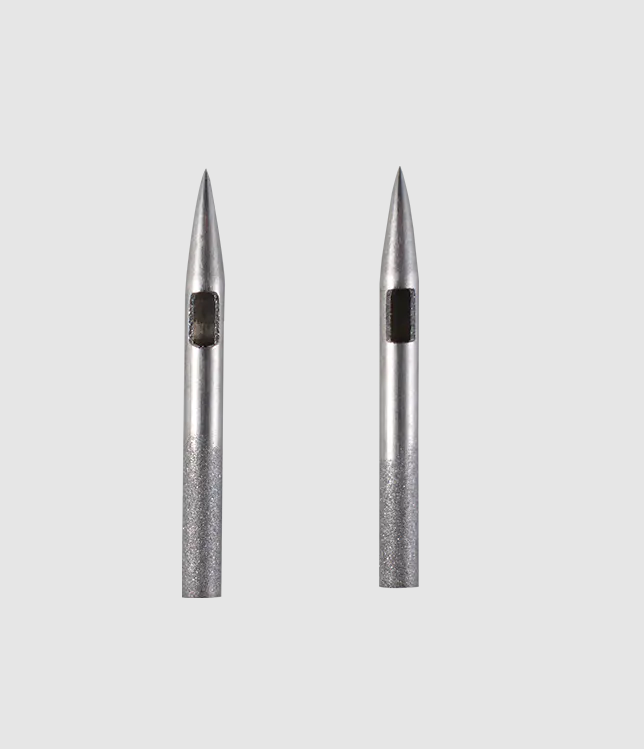
A needle intended for biopsy, anesthesia, fluid delivery, sampling, or minimally invasive equipment may require a different structure even when the basic tube size appears similar. Engineers typically need to define the working length, outer diameter, wall thickness, tip configuration, bending requirements, and connection method before production begins.
As a manufacturer, we recommend converting the intended application into a clear technical specification before quotation. This reduces repeated design changes during prototyping and helps both sides evaluate manufacturability at an early stage.
Medical needle production depends heavily on the relationship between material properties and processing methods. Stainless steel is widely used for medical components, while other materials may be considered for applications requiring specific mechanical or functional characteristics.
Material selection should therefore be linked to forming, cutting, grinding, cleaning, and final-use requirements rather than treated as an isolated purchasing decision.
For OEM projects, buyers should also request material documentation and define the required material grade in the technical file to maintain consistency between prototype and production batches.
For special needles, the tip is often one of the most application-sensitive areas. Bevels, cutting edges, openings, bends, and other customized features need controlled processing because small variations can affect insertion, sampling, fluid passage, or device assembly.
Our manufacturing approach focuses on matching the processing method to the requested geometry. Depending on the design, operations may include precision cutting, grinding, bending, drilling, polishing, or other micro-processing procedures.
A physical sample is useful, but it should not replace a complete technical specification. Before moving into repeat production, buyers should confirm:
This information gives engineers and purchasing teams a common reference and makes future reorders easier to control.
Custom medical needle projects often involve several stages, from initial drawings and prototypes to design verification and production. A supplier with engineering and manufacturing capabilities can help identify processing limitations before tooling or production resources are committed.
OEM/ODM cooperation is particularly useful when the buyer needs a private specification, customized geometry, or integration with an existing medical device. Established specialty needle manufacturers can support projects from prototype development through production and, where required, packaging or sterilization coordination.
For procurement teams, approving a prototype is only one part of supplier evaluation. Consistency during repeat manufacturing is equally important. Dimensional inspection, visual checks, surface inspection, and process controls should be incorporated according to the product specification and intended application.
A practical supplier evaluation should therefore consider not only sample quality but also manufacturing capability, documentation, inspection procedures, production traceability, and communication efficiency.
The current procurement environment places greater attention on supply continuity and manufacturing resilience, particularly for medical consumables and components. Recent healthcare procurement activity has also highlighted the value of diversified sourcing and stronger visibility across the manufacturing base.
For buyers developing or sourcing Special Medical Needles, the most effective approach is to evaluate the complete manufacturing process—from material selection and needle geometry to inspection, documentation, and repeat-order capability. As a manufacturer, we work with medical device companies to translate application requirements into practical needle specifications, supporting customized development and stable production for international markets.
Wenzhou Kangyu Medical TREATMENT
+86-0577-86858771
+86-13957709138
No. 626 Airport Avenue, Longwan District, Wenzhou City, Zhejiang Province, China
Contact Us
