
 English
 Español



+86-0577-86858771
Medical procedures that involve Solid Medical Needles and Puncture Needles rely heavily on precise technique to ensure safe and effective outcomes. These needles, commonly used in injections, blood sampling, and other clinical tasks, differ in structure and handling requirements. Understanding how solid medical needles affect injection techniques can help healthcare providers maintain accuracy, reduce procedural errors, and support a controlled environment for both patients and staff.
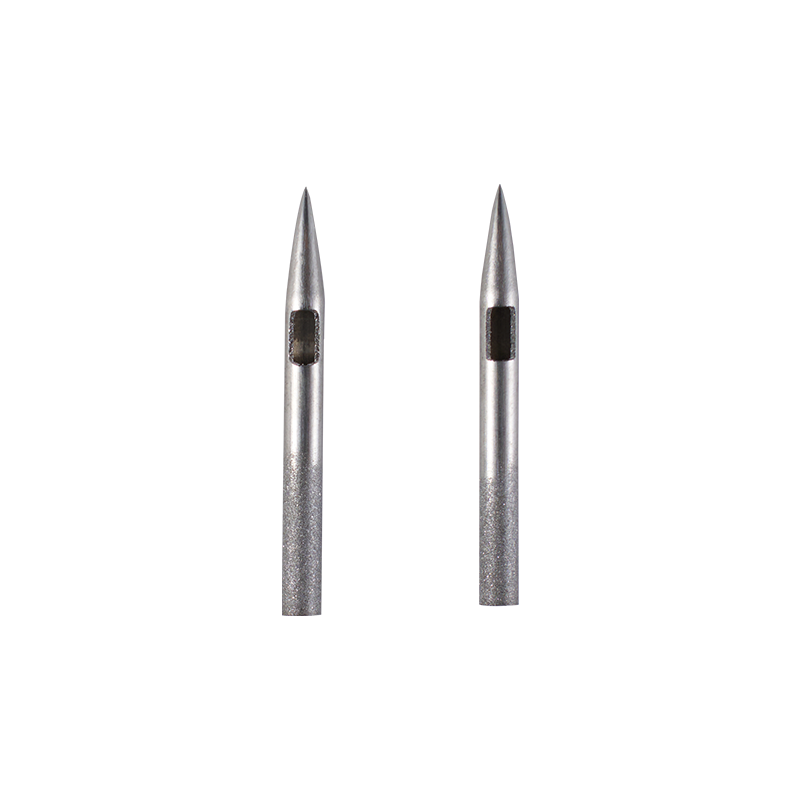
Solid medical needles have a firm, unbroken shaft, which provides stability during insertion. This rigidity can help maintain a consistent path when performing injections or punctures, making it easier for clinicians to target specific tissue layers. In contrast, puncture needles, which may be hollow for fluid collection, require careful alignment to avoid bending or deflection during insertion. Recognizing the structural differences between these needle types is essential when determining the appropriate angle, depth, and speed of insertion for each procedure.
The diameter and length of the needle also influence handling. Solid medical needles of varying sizes require adjustments in grip and insertion technique to ensure smooth penetration. Clinicians often adjust their hand position and the amount of applied force depending on the needle dimensions, tissue density, and procedural requirements. Understanding these relationships helps reduce the risk of unintended tissue trauma and supports consistent performance across repeated procedures.
Correct handling of solid medical and puncture needles plays a key role in achieving accuracy. Clinicians should stabilize the target area and maintain a steady hand during insertion. Using gentle, controlled movements reduces the likelihood of needle deviation and helps maintain the intended trajectory. Attention to visual and tactile feedback during insertion allows practitioners to adjust in real time, particularly when encountering resistance or changes in tissue density.
Sterility and preparation practices also affect needle performance. Ensuring that needles are properly stored, free from defects, and clean before use prevents obstruction or uneven insertion. Puncture needles, often used for fluid collection, benefit from consistent bevel orientation and alignment to maintain smooth entry and extraction. Adhering to recommended handling procedures contributes to accuracy without requiring excessive force or repeated attempts.
Injection accuracy is influenced not only by needle characteristics but also by external factors such as workspace organization and lighting. Well-lit, uncluttered environments allow clinicians to maintain focus and reduce the risk of unintentional movements. Changes in patient positioning, tissue tension, or movement may necessitate adjustments in technique, highlighting the importance of situational awareness during procedures.
Experience and practice with different needle types are crucial for precise technique. Training programs that include both solid medical and puncture needles enable clinicians to recognize subtle differences in handling and insertion characteristics. Repeated exposure and guided practice improve coordination, confidence, and responsiveness to variations in tissue or needle behavior. Mentorship and simulation exercises can reinforce these skills, helping staff maintain consistent accuracy during real-world procedures.
Regular review of protocols and adaptation to new needle designs also support consistent results. When needle dimensions, material, or intended application changes, handling instructions should be revisited. Integrating updated procedures into daily workflow ensures that all staff are familiar with variations in needle performance, which supports more predictable outcomes and reduces procedural variability.
Careful handling, situational awareness, and ongoing training, clinicians can manage the influence of solid medical needles on injection accuracy. These considerations help maintain controlled, precise procedures, support patient comfort, and contribute to consistent performance in clinical applications.
Wenzhou Kangyu Medical TREATMENT
+86-0577-86858771
+86-13957709138
No. 626 Airport Avenue, Longwan District, Wenzhou City, Zhejiang Province, China
Contact Us
